

Modular home construction in Madrid, Spain
At SantaFe Construcciones we build modular homes in Madrid, Spain: permanent, energy-efficient houses made from factory-built modules with a steel frame structure, assembled on a reinforced concrete foundation. We offer six 3-bedroom models (DOMUS, ATRIO, KUBE, AEDES, MODUS and HABITAT) and we handle the documentation and procedures with the authorities for you.
We look after every stage of the construction of a modular home with precision and attention to detail. You share your vision for your future home, and our team presents a proposal for the materials and procedures to follow. Once you approve it, we start building your new modular house.
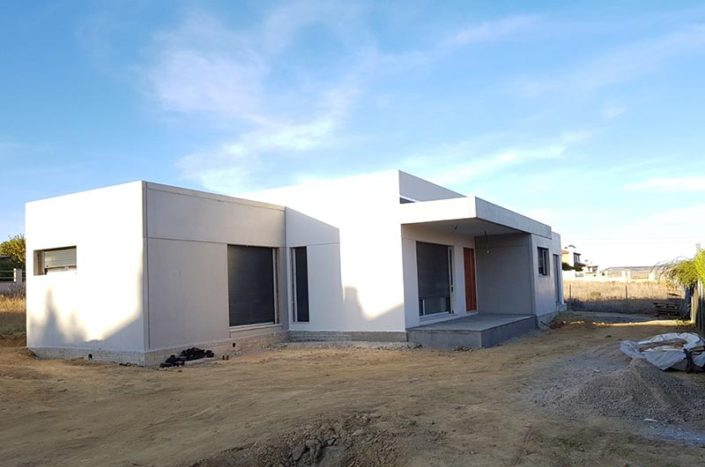
Would you like to build your own modular home?

Modular houses vs prefabricated houses: what is the difference?
A modular house is built off-site in sections, or modules, inside a factory. Once the modules are finished, they are transported to the plot and assembled on a permanent foundation. The term prefabricated house is broader: it is used for any home whose parts are made in a factory, from permanent dwellings to temporary or mobile units. In Spain, what really matters is not the name but whether the home is permanent. A modular home fixed to a foundation and connected to water, electricity and drainage is treated like any other building. It must comply with the Código Técnico de la Edificación (the Spanish Building Technical Code, known as CTE) and the Ley de Ordenación de la Edificación (LOE), and it needs a building permit from the local council.| Permanent modular home | Temporary or mobile unit | |
|---|---|---|
| Foundation | Fixed to a permanent foundation | Usually no permanent foundation |
| Building regulations (CTE and LOE) | Mandatory, the same as for a traditional house | Depends on its use; temporary units such as site offices may fall partly outside the CTE |
| Building permit | Required | Also required if it is used as a permanent residence |
| Typical use | Main or second home | Site offices, removable or temporary accommodation |
How to build a modular home in Spain: permits and steps
Building a permanent modular home in Spain follows the same legal process as a traditional house. These are the main steps:
- Check the plot. Residential use must be permitted on the land. Request the urban planning information (información urbanística) from the local council. Building on rustic land is only possible where regional and municipal planning expressly allows it.
- Technical project. An architect draws up the project, which must comply with the CTE and include a geotechnical study of the plot to design the foundation.
- Building permit. The project is submitted to the council to obtain the building permit (licencia de obra mayor). Processing times depend on each council.
- Manufacture and site works. The modules are built in the factory while the foundation is prepared on site, and then they are assembled.
- Completion and registration. The architect issues the completion certificate, the first occupation licence is requested, and the new home is declared and registered in the Land Registry and the Cadastre.
At SantaFe Construcciones we work on modular house projects in Madrid and we handle all the necessary documentation, as well as the procedures with the different administrations. If you are planning a modular home, contact us and we will explain everything you need to know for your specific plot.
Our modular home models
All six models have 3 bedrooms. This table summarises the main features of each one; where two areas are shown, they correspond to the two available size options.
| Model | Layout | Bathrooms | Area |
|---|---|---|---|
| DOMUS | Single-storey | 1 bathroom and 1 toilet | 112 m² or 130 m² |
| ATRIO | Two-storey | 2 bathrooms and 1 toilet | 132 m² or 150 m² |
| KUBE | Various layouts, with staircase | 2 bathrooms | 113 m² or 134 m² |
| AEDES | With staircase, office and porch | 2 bathrooms and 1 toilet | 152 m² or 189 m² |
| MODUS | Single-storey | 2 bathrooms | On request |
| HABITAT | Single-storey, with office | 2 bathrooms and 1 toilet | 130 m² or 149 m² |
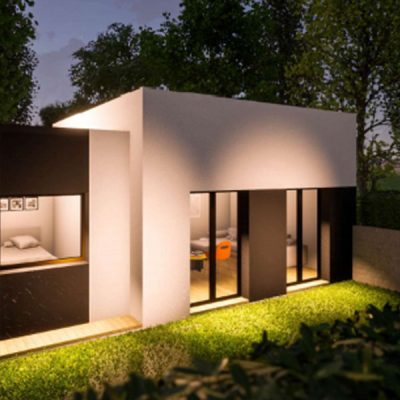
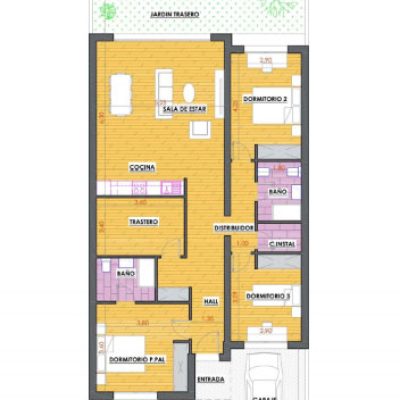
DOMUS modular home: single-storey with garden
- Single-storey layout.
- Efficient orientations for energy consumption savings.
- Bright rooms with large windows.
- Living room, bedroom, and kitchen with access to the garden.
- 3 bedrooms.
- 1 toilet and 1 bathroom.
- Kitchen – Dining room.
- Storage room.
- Front and back garden areas.
- Built area of 112 m² or 130 m².
ATRIO modular home: two storeys with terrace
- Two-storey layout.
- Large and bright windows.
- 3 bedrooms.
- 2 bathrooms and 1 toilet.
- Kitchen-Dining room.
- Terrace.
- Staircase.
- Available area of 132 m² or 150 m².
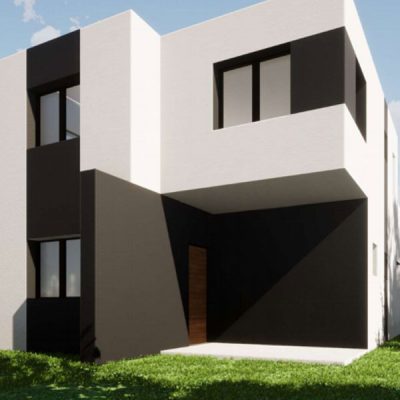
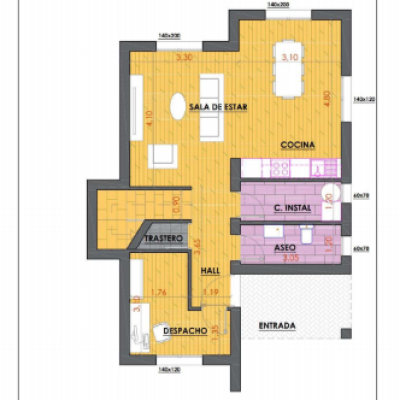
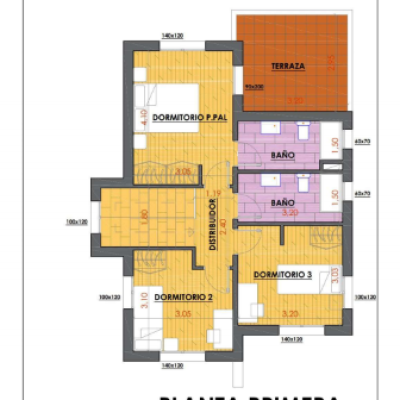
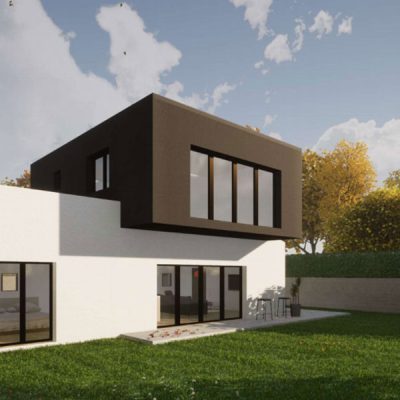
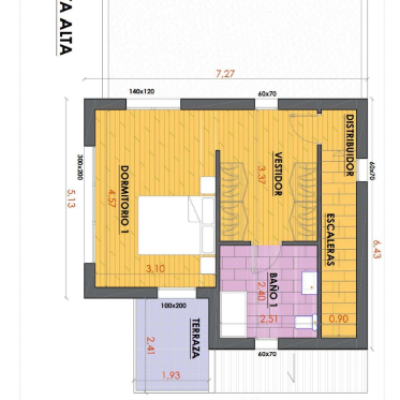
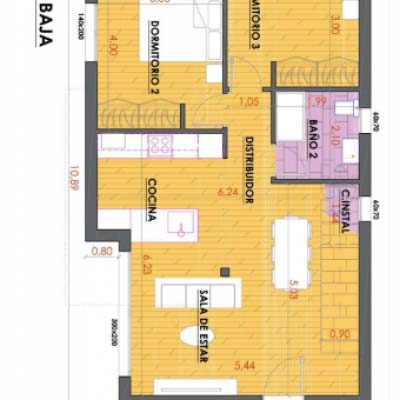
KUBE modular home: flexible layouts
- Various layout and size options.
- Designed for maximum energy savings.
- 3 bedrooms.
- 2 bathrooms.
- Kitchen-Dining room.
- 2 hallways.
- Staircase.
- Terrace.
- Non-accessible roof.
- Available areas of 113 m² or 134 m².
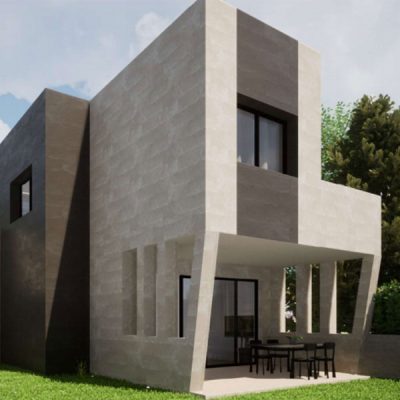
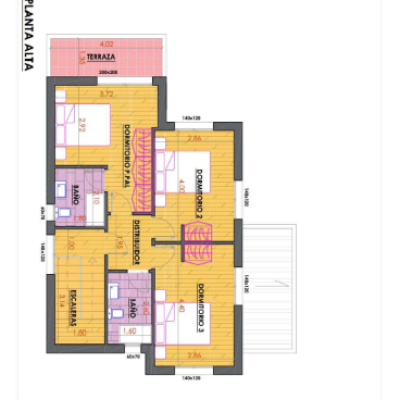
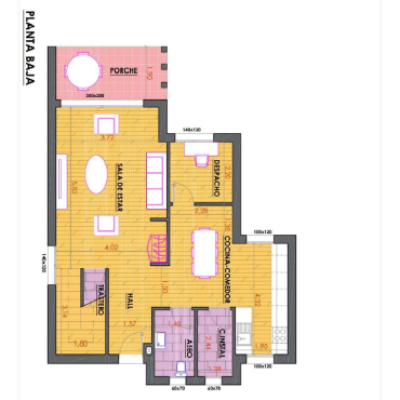
AEDES modular home: with office, terrace and porch
- 3 bedrooms.
- 2 bathrooms and 1 toilet.
- Kitchen-Dining room.
- Living room.
- Office.
- Storage room.
- Staircase.
- Terrace.
- Porch.
- Available area of 152 m² or 189 m².
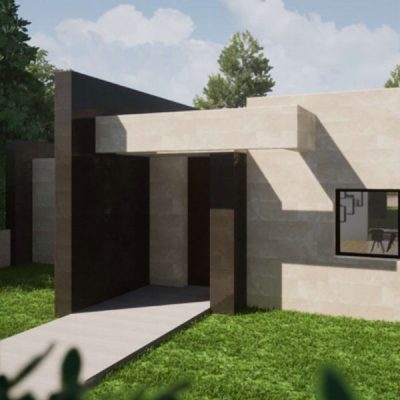
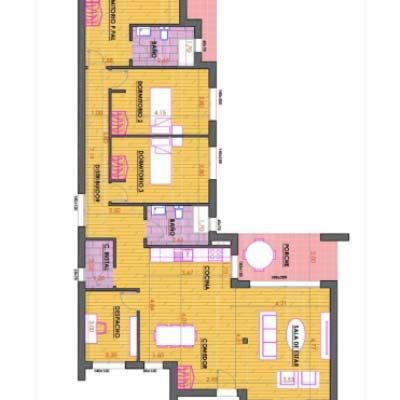
MODUS modular home: single-storey with porch
- Single-storey layout.
- 3 bedrooms.
- 2 bathrooms.
- Kitchen-Dining room.
- Living room.
- Lounge.
- Porch.
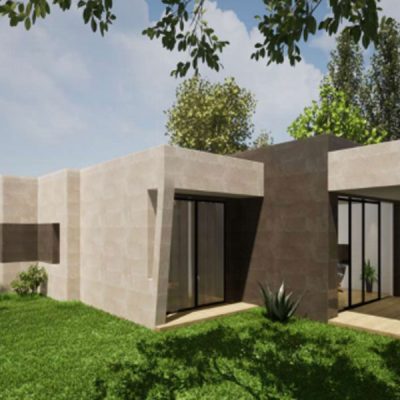
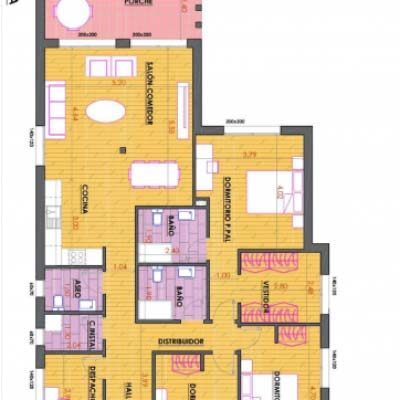
HABITAT modular home: single-storey with office
- Single-storey layout.
- 3 bedrooms.
- 2 bathrooms and 1 toilet.
- Living room with kitchen.
- Hall.
- Office.
- Available areas of 130 m² or 149 m².
Building specifications of our modular homes
These are the standard specifications of SantaFe modular homes, from the foundation to the finishes and installations.
Foundation and structure
- Foundation using reinforced concrete slab on a gravel bed and radon barrier according to the Geotechnical Study.
- The structure will be modular, using a Steel Frame system.
- Gravel floor, plastic insulation for waterproofing, and ground floor concrete.
Exterior walls
- Monolayer mortar on a metal mesh framework, with 8 cm thick rock wool insulation, interior drywall lining, and paint.
Doors and windows
- Passage doors in melamine, smooth white, and 35 mm thick.
- Fittings and handles in matte chrome.
- The entrance doors to the house will be metallic, armoured and white.
- The bathroom and main bedroom will have a security lock.
- Prefabricated exterior windows in white PVC with 4 chambers, low-emission 4/16/4 glass, and manual PVC blinds.
Partitions
- The separation of the house layouts will be done with plasterboard panels.
Flooring
- Floating floor AC4 or tiles for interiors, wood finish, in a wood tone of choice, with lacquered skirting boards in the colour of the interior carpentry, 10 cm high with right angles.
- Bathrooms will be tiled with porcelain plates.
- Parking areas will be done in printed concrete.
Walls and ceilings
- Bathrooms will be tiled to the ceiling in the shower or bathtub area; the rest will be tiled up to the horizontal strip.
- Kitchens will have a plastic paint finish over drywall suitable for wet areas.
- All vertical surfaces will have a smooth paint finish, except in areas clad with ceramic tiles.
- The entire house will have a false ceiling of plasterboard or plaster to allow for the installation of utilities.
Roof
- The roof will be made with a lightweight metal roof and a 5 cm thick sandwich panel with 6 cm of glass wool insulation.
Plumbing
- Sanitary fixtures from Roca or similar in white, countertop basin from Roca or similar, shower tray model Roca or similar.
Electrical installation and earthing
- The electrical installation will be for 230v with a protective panel located in the hall and several independent circuits, according to a high level of electrification.
Telephone and intercom
- Telephone sockets will be installed in all rooms. An intercom will be installed for access control to the house.
Heating and air conditioning pre-installation
- Production by natural gas condensing boiler, high efficiency from VAILLANT or similar, with a storage tank located on the roof supported by solar panels, sufficient to produce 60% of the domestic hot water demand for the houses.
- The heating installation will be through aluminium element radiators.
- A/C pre-installation in the living room and main bedroom for the installation of split-type machines.
TV and FM
- The reception equipment and antenna mast will be placed on a resistant element without prejudice to the roof.
- The antenna will be protected with grounding. TV sockets will be installed in all rooms, including the kitchen.
Optional extras
Homeowners can add a series of optional features to the house, including:
- Security shutters with anti-intrusion protection and automation.
- Home automation to control blinds and lighting.
- Underfloor heating and aerothermal system.
Frequently asked questions about modular homes in Spain
How do you design a modular house?
The first step is to consider the available space, so choosing the land is essential. Selecting the architect and project manager will shape the design of your modular house and the estimated completion time. Once the project is ready, a building permit must be requested from the local council, and construction can begin as soon as it is granted.
Do modular homes in Spain need a building permit?
Yes. A modular home fixed to a foundation and used as a dwelling is considered a permanent building. It needs a building permit (licencia de obra mayor) from the local council and must comply with the Código Técnico de la Edificación (CTE) and the Ley de Ordenación de la Edificación (LOE), exactly like a traditionally built house.
What type of land do I need for a modular or prefabricated house?
You need a plot where residential use is permitted by the local planning rules. Before buying or designing, request the urban planning information (información urbanística) from the council where the house will be installed. Building on rustic land is only possible where regional and municipal planning expressly allows it.
Is it cheaper to build or to buy a modular house?
The price of your future house depends on its size, layout, materials and finishes, as well as the plot and the permits required. That is why we prepare a detailed quote for each project, so you know the real cost of your modular home before construction begins.
How long does it take to build a modular house?
The overall timeline depends on the model, the site works and, above all, the time the council takes to grant the building permit. One of the advantages of modular construction is that the modules are built in the factory while the foundation is prepared on site, which usually shortens construction compared with a conventional house.
What structure do SantaFe modular homes use?
Our modular homes use a steel frame structure. The foundation is a reinforced concrete slab on a gravel bed with a radon barrier, designed according to the geotechnical study of the plot.
Can I customise my modular home?
Yes. You share your vision for your future home and our team presents a proposal for materials and procedures. Some models, such as KUBE, offer various layout and size options, and every home can include optional extras such as security shutters, home automation, underfloor heating and an aerothermal system.